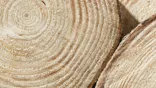
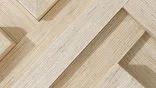




Metsä calls its new home Metsä Portti. With its wood-clad façades, terraces and green roofs, the building truly serves as a gateway to Metsä (forest). At the same time, it brings warmth and a connection to nature to Keilaniemi’s modern office landscape, which is dominated by glass, steel and concrete buildings. The building combines the best properties of wood, steel and concrete.
Among Europe’s tallest wooden office buildings
Keilaniemen Portti, owned by Varma, is one of the tallest wooden office buildings in Europe. The building was designed by ARCO Architecture Company, and Jatke served as the project management contractor.
At Keilaniemen Portti, wood is both a construction material and an integral part of the identity of the premises and the employee experience. Wood and Metsä’s own wood products have been used in columns, intermediate floors and roof elements, internal staircases, partition wall frames, façade and interior cladding, flooring and terraces, among other applications.
Keilaniemen Portti is a good example of hybrid construction, combining the best properties of wood, concrete and steel in a way that is appropriate for each application. Thanks to the extensive use of wood, the building’s carbon footprint is almost 50 per cent lower than that of an equivalent building constructed entirely of concrete.
“Metsä Portti demonstrates in concrete terms how versatile wood can be in modern construction based on prefabrication. Metsä’s sawn timber, plywood and Kerto® LVL have been used in both load-bearing structures and exterior and interior surfaces. The same products are suitable for a wide range of applications, from detached houses and apartment buildings to public buildings and demanding industrial applications. The best results are achieved when the properties of wood, steel and concrete are combined appropriately, taking into account both technical performance and overall construction costs,” says Jussi Björman, Vise President, Research and Development at Metsä’s wood products business.
A work environment that adapts to the needs of the working day
A first-class employee experience has been the starting point for the design of the new head office. The work environment has been considered as a whole, from the functionality of the spaces and encounters between people to wellbeing, services and commuting.
Metsä became involved in the workplace design at an early stage of the construction project. The adaptable spaces have been designed to accommodate both different types of work and the needs of different employees. During the day, employees can move seamlessly from spaces designed for focused work to collaboration areas, meeting rooms or larger work cafés. Shared spaces and services encourage people to move between floors and meet colleagues outside their own teams.
“We have taken an exceptionally holistic approach to designing the work environment. It is not just about workstations and meeting rooms, but about making the whole working day run smoothly, from encounters, wellbeing and services to commuting. Our aim is to create an environment where people want to meet one another and where collaboration is as easy as possible,” says Susanna Suomela, Office Services Manager at Metsä.
The premises support open, bold and impactful ways of working in line with Metsä’s values. In practice, this means sharing information, experimenting with new ways of working and collaborating more closely.
The building is targeting BREEAM Excellent environmental certification, WELL Core Gold certification, which focuses on employee experience and wellbeing, and an A energy rating. As much of Metsä’s existing office furniture as possible will be refurbished and reused, reducing both the need for new purchases and the environmental impact of the new office.
The employee experience starts with the commute
Metsä Portti is located at the intersection of the Keilaniemi metro station, the Jokeri Light Rail line and major transport routes. Metsä encourages its employees to use public transport and cycle to work by offering a commuting benefit, as well as good bicycle storage and changing facilities for employees.
The move to Keilaniemi marks the beginning of a new era for Metsä. The Group’s head office has been located in Tapiola since the 1970s. The new head office brings together the company’s forest-based identity, modern wood products and the ways of working of the future.
Photos of Metsä Portti for media use
For further information:
Maria Mroué, VP, Communications and brand, Metsä Group, tel. +358 (50) 3934974
Metsä Group
www.metsagroup.com
Metsä Group has its roots in the Finnish forest: our parent company Metsäliitto Cooperative is owned by approximately 90,000 forest owners. We make wood products that people around the world need every day. We focus on pulp, paperboards, tissue and greaseproof papers, wood products, and wood supply and forest services. We are committed to regenerative forestry that measurably strengthens the forest ecosystem. We promote a culture of diversity, equality and inclusion.
In 2025, our sales totalled EUR 5.8 billion, and we employ about 8,800 people.