Request an offer on forest management from your local forest specialist. The forest specialist knows which forest management work needs to be carried out in your forest. Forest management includes for example the establishment of a new forest and young stand management. You can also request an offer in the Metsäverkko service. These services are only available in Finland.

Young stand management is an investment in the future of your forest
Young stand management is an important part of forestry, in which trees are given space to grow by removing competing trees around the seedlings. Young stand management comprises early cleaning and pre-commercial thinning. In addition, young forest management is performed if young stand management was not carried out in time.
Request an offer on forest management
Young stand management is a profitable investment in the future of your forest. The profitability of young stand management arises primarily from the fact that more roundwood of a higher quality is obtained from the forest during the forest cycle. Quality and timely young stand management has several advantages:
- The first thinning phase accumulates significantly more roundwood than unmanaged forests.
- The forest cycle will shorten: An even stand where trees have enough space to grow will reach the first thinning phase much sooner than an unmanaged stand, for example.
- The share of valuable log of the overall wood yield during the cycle will increase: Since log wood earns forest owners nearly triple the income compared to pulpwood, growth in the share of log wood notably improves the profitability of forestry.
Timely young stand management saves money
Young stand management should be carried out at the right time, as delayed thinning makes the work more challenging, increases the related costs and reduces forest growth.
It is possible to receive state forestry support (metka) for young stand management. If you are an owner-member of Metsä Group, you can also use bonuses accrued from wood trade and forestry to pay for young stand management.
The goal of young stand management is a diverse and sustainable forest
The choices made in young stand management will have a great impact on the future of the forest. The aim in young stand management is to grow a mixed forest, which improves biodiversity and sustainability in a changing climate. In young stand management, the target is a 10 per cent share of broadleaved trees from early cleaning onwards. When different tree species are left to grow in the forest, it supports the adaptability of the forest and reduces the risks associated with extreme weather phenomena, for example.
If all broadleaved trees are removed during young stand management, it will be difficult to incorporate them into the forest later. The number of broadleaved tree species is the same before and after young stand management.
If undergrowth is not a problem for tree growth, it does not need to be completely removed. Young stand management also involves the establishment of new protective thickets or the preservation of old ones, which are excluded from forestry at all stages of forest management. Protective thickets provide protection and nutrition for birds and mammals.
How to carry out young stand management
-
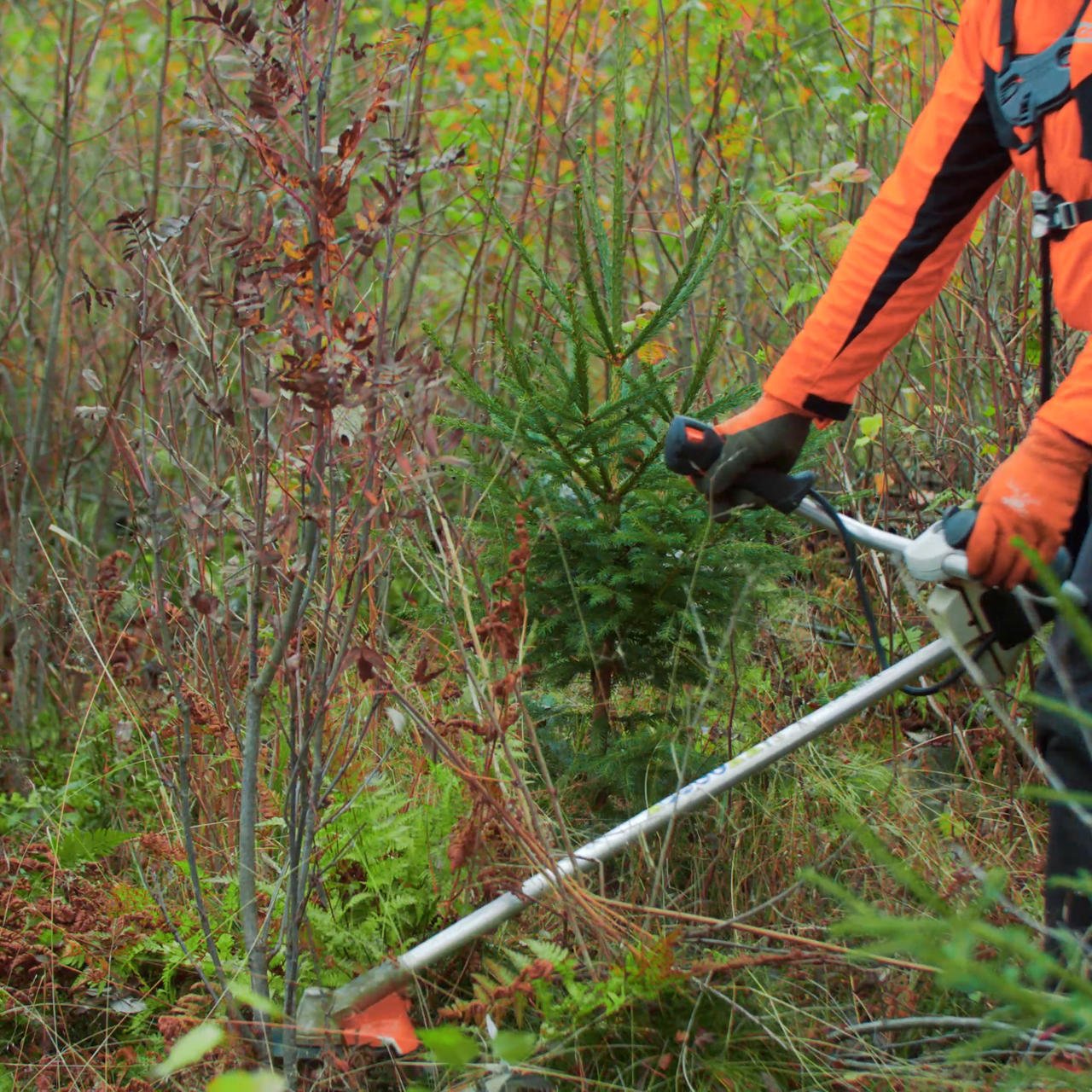
Early cleaning involves the removal of coppice
Early cleaning involves the removal of coppiceEarly cleaning is a forestry task in which broadleaved coppice hindering the growth of conifer seedlings is removed from the stand. Groups of conifer seedlings growing too close to each other may also be thinned.
Early cleaning is performed when pine or spruce seedlings reach a height of approximately one metre, which is usually 4–8 years after planting. Early cleaning is usually not required in cultivated birch stands.
In early cleaning, deciduous trees that have sprouted from stumps or roots, and which are clearly taller than coniferous trees, are completely removed. Some silver birch trees grown from seed that are as tall as or smaller than conifers are left to grow. Other broadleaved trees are also spared, especially in open spots. -
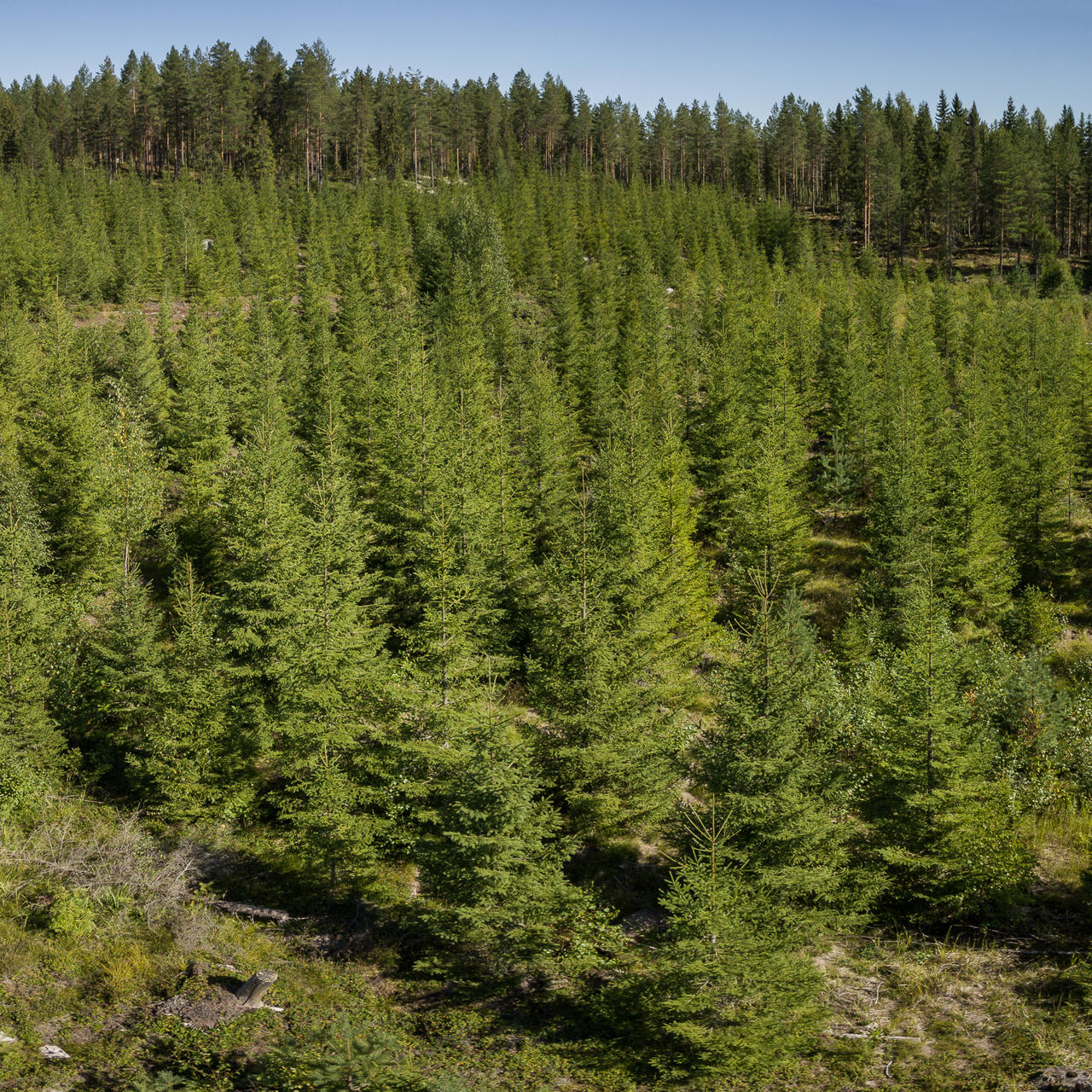
Pre-commercial thinning creates more growth space for trees
Pre-commercial thinning creates more growth space for treesIn addition to maintaining growth, pre-commercial thinning is required to safeguard the quality of the growing stock, as it helps create more growth space for better trees. In conifer stands, this means removing broadleaved trees hampering the development of coniferous trees, as well as poor-quality trees, trees growing too fast and conifers growing too close to each other.
Pre-commercial thinning should be carried out when spruce trees reach a height of 3–4 metres, pine trees a height of 4–7 metres, and silver birch trees a height of 4–5 metres. The stand is usually 10–15 years old at this stage.
In pre-commercial thinning, a mix of broadleaved trees is left in the forest, mainly silver birch grown from seed that are as tall as conifers, taking the total density into account. Other broadleaved trees of value to biodiversity are also saved in suitable places so that no tree species growing in the stand is completely removed.
-
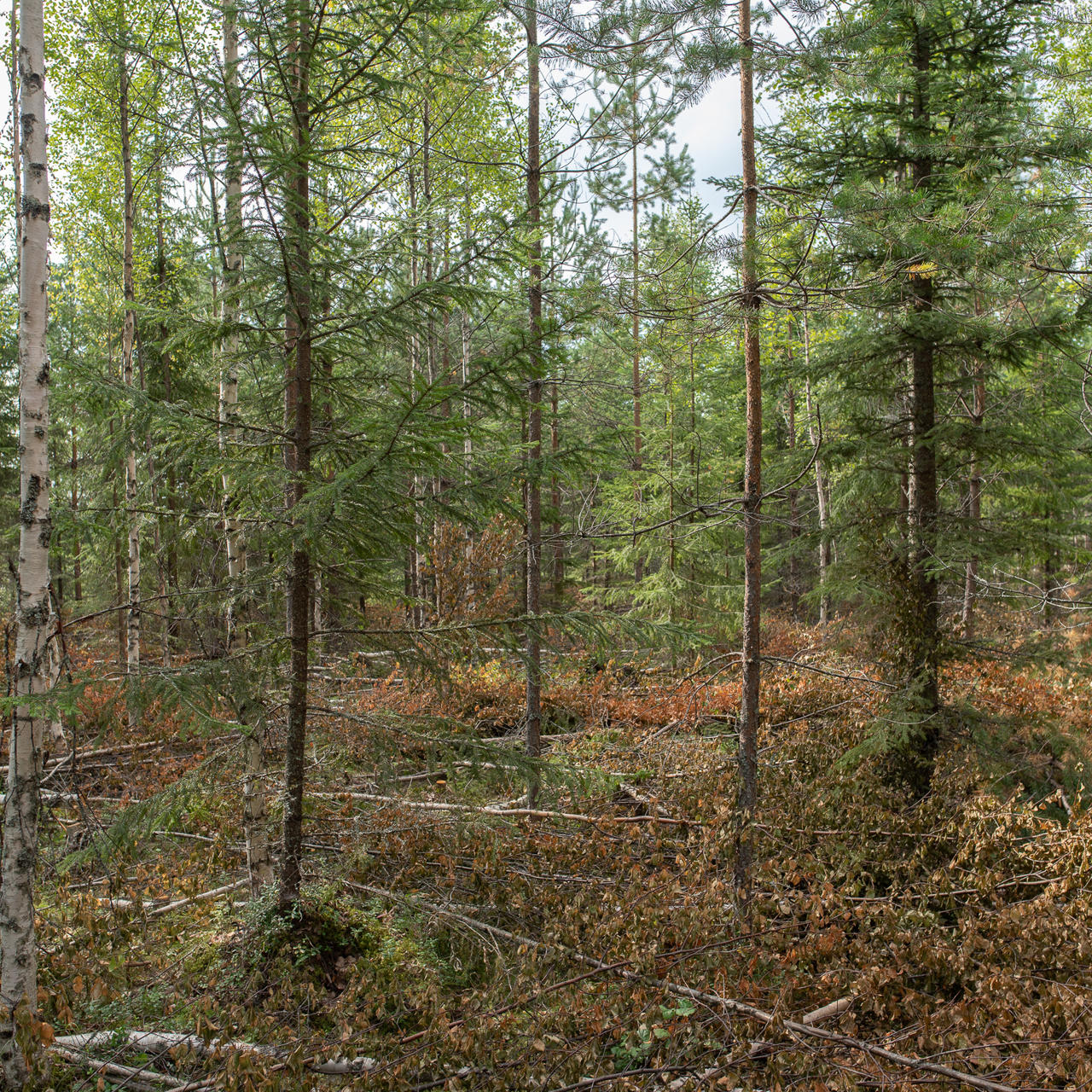
Excessively dense forests are handled in young forest management
Excessively dense forests are handled in young forest managementYoung forest management is required if young stand management has not been carried out, and the forest has grown too dense, to a height of 9–17 metres. Young stand management involves removing trees of poor quality and broadleaved trees overshadowing coniferous trees, as well as thinning stands.
Young forest management is an important task and an investment in the future, but it can also offer the forest owner wood trade income from energy wood or pulpwood. The measure will revive the value growth of your forest and make future felling financially more profitable.


Frequently asked questions about young stand management
What is young stand management, and why is it important?
What is young stand management, and why is it important?
Young stand management is forest management work that removes competing trees around the seedlings. It improves forest growth, increases the share of valuable log wood and shortens the forest cycle. Timely young stand management also saves costs.
What are the benefits of young stand management for forest owners?
What are the benefits of young stand management for forest owners?
Young stand management increases forest yield, as more roundwood accumulates during the first thinning, and the share of valuable log wood in the production of wood increases throughout the cycle. A well-managed seedling generates more income and improves the profitability of forestry.
How is forest biodiversity taken into account in young stand management?
How is forest biodiversity taken into account in young stand management?
Young stand management aims for a mixed forest and saves broadleaved trees such as silver birch and other species that are valuable from the perspective of biodiversity. This increases the climate resilience of the forest and supports biodiversity. Read more here.
When are early cleaning and pre-commercial thinning carried out?
When are early cleaning and pre-commercial thinning carried out?
Early cleaning is carried out when coniferous trees are about one metre tall (4–8 years from planting). It is time for pre-commercial thinning when the trees are 3–7 metres tall, and the stand is 10–15 years old.
Is it possible to get support for young stand management?
Is it possible to get support for young stand management?
Yes, it is possible to receive Metka support for young stand management. In addition, Metsä Group’s owner-members can use bonuses from wood trade and forestry to pay for young stand management.