
FSC® first came up some years ago in connection with Matti Oijala’s wood trade.
In a discussion with a forest expert, it became clear that nature values are important to Matti Oijala in forest management. For this reason, the FSC would be suitable for the way he managed his forests.
The more Oijala studied the certification, the more he became interested in it.
“I noticed that FSC suited my own way of managing my forest. I also felt that the certificate would help develop forest management and bring new ideas to it.”
FSC is visible at all stages of forest management
Matti Oijala’s forests are in Nastola, in Lahti. A generational handover of the home farm, which includes about 70 hectares of forest and 20 hectares of arable land, took place in 2001. Since the beginning of the 1990s, Oijala has also been a partner in a 26-hectare forest partnership founded by Oijala and his relatives.
In addition to PEFC, FSC is another forest certification system commonly used in Finland. It requires forest management that supports biodiversity, economic sustainability, and the preservation of landscape and cultural values.
The principles of FSC certification are followed in all forest management actions. For example, in practice, the certificate requires that attention is already paid to the share of broadleaved trees when processing seedling and thinning stands, and that endangered species and valuable habitats are identified, and information about them is included in the forest plan. Sites protected by legislation, such as particularly important habitats under the Finnish Forest Act, are left untouched. In addition, a representative number of other important ecosystems are left in their natural state.
In FSC, the total amount of forest land outside forestry and forest land subject to special treatment must be at least 10 per cent of the area of forest land. At least five per cent of forest land is permanently excluded from forestry. The rest are special forest areas where the forest is managed while preserving biodiversity and nature values.
The past of Oijala’s forests is well known.
“Historically, the forests were slash-and-burn areas, and broadleaved trees have dominated them since then. Since the beginning of the 1960s, the forests have been cultivated vigorously. Now, there is a lot of spruce, about 85 per cent of the forests, and a large part of the forests are approaching the final felling age.”
Protected areas were easy to find
Preparation for the FSC certification started with the forest specialist and Oijala reviewing the forest holding’s forest plan together and agreeing on areas that would be completely excluded from forestry or would be subject to special treatment.
Despite a solid history as a commercial forest, suitable areas were easily found.
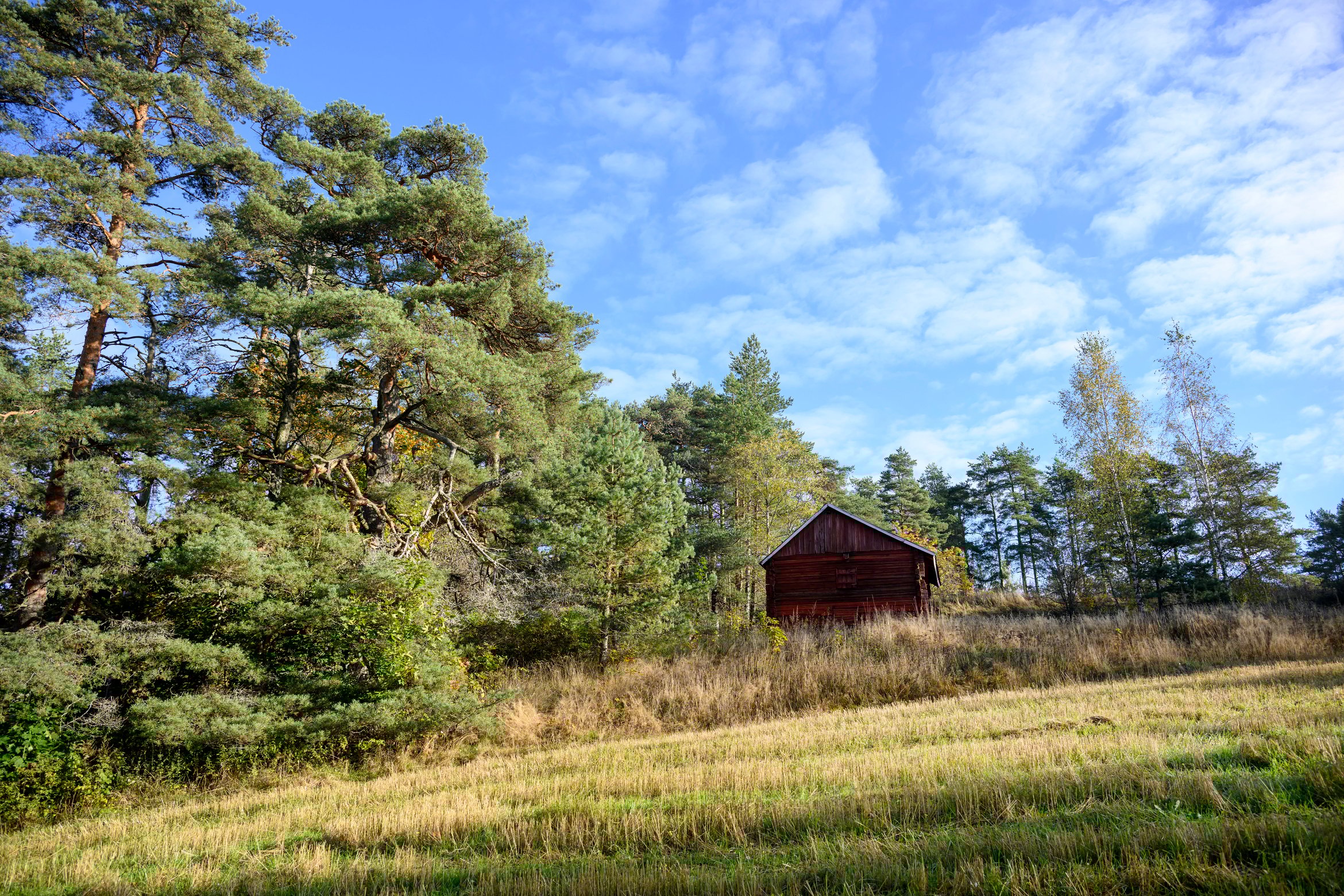
“There is a fine old pine hill near the central plot, but I wouldn’t fell it anyway. There’s also a hilltop area with a lot of decaying wood. In addition, a strip of the lake shore and the holding’s peatland forests were protected,” Oijala says.
Once the areas were identified, their precise boundaries were still checked in the forest.
FSC’s protection obligation is often an issue that raises questions among forest owners. The costs of this are a concern.
According to Oijala, the costs remained ultimately moderate.
“The most significant financial sacrifice was the peatland forest with log wood. In the short term, I could get more income by felling it, but this is a better long-term solution. And the sacrifice wasn’t too overwhelming.”
After the preparations had been made, the process proceeded quickly, and the contracts were signed after a couple of weeks.
Oijala is included in Metsä Group’s group certificate, so he doesn’t have to manage the certificate himself. The leader of the certification group is responsible for that.
With the certification, the forest holding committed to FSC’s rules, of which Oijala must be aware as the owner of the holding.
“The first audit has already taken place. A team of inspectors visited the felling site and made sure that all tree species were identified, and that there were enough retention trees. Everything was fine, but they did ask a lot of questions.”
In addition, the first wood sale transactions are already completed. Oijala says that they didn’t differ that much from the time before the certification.
“A significant visible change was that all the decaying wood now remained at the felling site. We used to collect it for firewood.”
Oijala could sell wood to anyone, but he’s so far done business with Metsä Group.
“They’ve paid a price that I consider appropriate.”
Broadleaved trees are spared in forest management
For FSC-certified roundwood, Metsä Group pays its contract customers an additional price, which the company increased from the beginning of December.
“For pulpwood, the additional price is significant – almost two euros per cubic metre. For log wood, the addition is less significant,” Oijala says.
Oijala manages his forests so that the treated stands are between 0.5 and 3 hectares.
“In reality, our forest management is more small-scale. For example, we’ve tried to leave untouched patches in larger stands.”
Oijala always spares alder, great sallow, aspen and broadleaved trees when felling.
“The alder binds nitrogen and adds it to the soil, and the aspen is great for high biodiversity stumps.”
Oijala has noticed that this type of forest management has become more common. For example, harvester operators no longer need to be guided in the same way as before.
“In the past, I always had to remind them not to fell great sallows. Now they reply that they weren’t going to.”
Oijala manages his own forests himself until it is time for the clearing saw phase.
“FSC doesn’t change how I manage seedling stands because I’ve never cleared all the broadleaved trees. Broadleaved trees protect spruce, and an appropriate competition between broadleaved trees and spruce improves growth.”
Recommendation for the FSC certification
Demand for FSC-certified wood in the market is growing. According to Oijala, this was also one of the determining factors when he considered joining the certificate.
“Certification is a way to transparently show what is done in the forest. If it didn’t exist, no one would know how forests are managed. Without transparency, the risk of misunderstandings and confusion increases. For example, you can already see how deforestation and clearcutting are confused when the forest is discussed.”
Based on his own experience, Oijala recommends FSC to others.
“FSC is a sensible certification for forest management. The requirement to protect at least five per cent is nothing to be alarmed about. There are rocks or peatland areas on many forest owner’s lands, and their treatment has to be restricted anyway.”
Text Maria Latokartano
Photo Jussi Helttunen
FSC-C111942
This article was originally published in Metsä Group’s Viesti magazine 4/2025.